Sports watch x-fact, wm II alto
|
| triglav17. 07. 2009 10:36:37 |
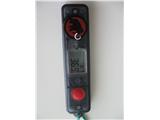
I'm wondering if anyone has experience with or knows the sports watch x-fact, wm II alto, which besides basic functions also has altimeter, compass and barometer.
Especially if the mentioned meters work reasonably accurately, since I'm interested in buying it.
Thanks for your experiences and response.
|
|
|
|
| CAR24. 12. 2009 23:12:39 |
I myself have CASIO (200e) I paid for it almost two years ago, I can tell you they are not the most accurate (altitude) especially in bad weather, in sunny +- 4 meters. The watch or altimeter depends on the barometer which mostly auto-adjusts. My fellow from the hills has SUNTO and it shows much more accurately for him. Don't rush the purchase, better wait a bit for some more advice. LP
|
|
|
|
| viharnik25. 12. 2009 07:45:50 |
Suunto watch altimeters are really the most precise and they still work well, that's what conditions the price for the barometer mechanism. The most advanced and suitable model for mountaineering is the Core model. Polar watches perform best at pulse measurement, the mountaineering models SNX 300,500 broke down quite a bit, so they don't import them anymore.
A very precise handheld altimeter is Mammut's, which measures only altitude and temperature and is accurate to one meter. Price is only around 50eur.
Unbreakable and most reliable is surely the analog needle one from Silva.
| (+1) |  | |
|
|
|
|
| andr33j25. 12. 2009 10:39:22 |
I have x-fact, very satisfied with it. If you don't need some professional one, this is totally worth it.
Once you set the altitude (several options), it works flawlessly.
|
|
|
|
| serajko25. 12. 2009 11:19:04 |
I use Askot alti +compass. It works for the third year on the same batteries. Accuracy depends entirely on weather changes. In stable "kiksa" up to 4m in unstable up to 20m. I think for this price it's one of the most useful (32€ in 2006)
|
|
|
|
| šodrovec27. 12. 2009 11:52:42 |
Everything is known, but maybe it won't hurt ...
Since I think we all expect too much from these handy gadgets, I'll write something general about baro-altimeters (altimeters that work on the principle of measuring air pressure).
First, let's get real. Expecting +-1m accuracy from such an altimeter is big nonsense. Expecting that in all weather (and temperature) conditions is unmatched nonsense!
Altimeter and temperature compensation.
Air pressure is actually air density. Which depends not only on altitude but also on temperature. Therefore, manufacturers of digital altimeters include in the altitude calculation formula not only the measured air pressure data but also temperature measurement, as well as a scale (table) of expected temperatures at certain altitudes. With the help of this table and constant measurement of actual air temperature, they perform a correction of the altitude calculation (basis is measured air pressure) and thus achieve a better approximation (!) to the actual altitude. Now we know the primary reason why handheld barometric devices usually also contain a thermometer. And we must know that if we wear the device on the wrist, it doesn't measure the real ambient temperature (body heat influence) and therefore temperature compensation can't be correct. (Now it's clear that those who hang the watch-altimeter somewhere on backpack straps aren't necessarily posing or bragging.)
From all this follows that such altimeters are in principle (!) more accurate than those that don't consider temperature compensation. I emphasized "in principle" because the basis of good altitude calculation is still primarily a good barometric sensor. Then only a precise thermometer and altitude-temperature table that is best adapted to the environment in which we use the altimeter.
It's clear that analog altimeters don't consider temperature compensation ...
One more thing. For demanding precision freaks. If we know the aforementioned altitude-temperature table (usually part of the instructions for using the altimeter) for compensation and somewhere on the tour, at known altitude (map!), we determine temperature deviation from tabular values, we can perform an additional recalculation of the altitude correction and thus really approach the actual altitude. We just need a calculator and the appropriate formula (altimeter instructions). Hm, and we have to love it!
Of course, no sensor accuracy or calculations help if we haven't set the starting altitude on the altimeter at the beginning of the tour (and then at every known altitude point) ...
We must of course count on deviations, regardless of altimeter quality, always when weather changes during the tour. If it worsens, i.e. air pressure drops, the altimeter will in principle (!) show too many meters. And vice versa. Again "in principle", because we also need to consider possible rapid temperature change.
And practice. Most acquaintances say it's not unusual on average to expect error up to tens of meters per thousand meters ascent. They also claim that usually and on average the gadgets here show a bit less. But if we wanted to rely on these experiences, we'd have to know the manufacturers and types of altimeters acquaintances used, the seasons when ascents were done, the weather conditions then, and ... By the way, Suunto works well for me too.
Finally a question: "Who of us and when needs an altimeter with expected deviation ... say .... better than ... +- 20m?"
| (+1) | | |
|
|
|
|
| viharnik27. 12. 2009 12:19:24 |
Nicely explained and I fully agree that for mountaineers the altitude data is most important, at known altitude points (hut, pass, summit), where with larger altitude deviations we determine the barometric situation on the terrain. Since the barometer works on air pressure, upon the passage of a front the air pressure drops and consequently shows a higher value than the actual. Usually a deviation from the real altitude by 50-100m already threatens with a stronger weather deterioration.
I add that in Europe only one company (two copy from it—consequently worse accuracy or usability) produces barometer mechanisms converted to electronic record. Principally with cheap watches, the more instruments (compass, watch thermometer, inclinometer, alarms etc.), the less precise or quality each measuring instrument is and with shorter lifespan.
 1 1
|
|
|
|
| zmp227. 12. 2009 12:52:15 |
Excellent šodrovec, very nicely explained, I'd add that in the time of GPSs, searching for current altitude with barometer...
I myself have been looking for a good thermometer for some time, with temperature scale at least from -20 (desired -30) to at least +50 (desired +60), one with carabiner, or possibility to hang it on backpack.
One more thing, (though it doesn't fit this topic), does anyone know where to buy a large umbrella (150 cm diameter and more)?
Thanks
|
|
|
|
| marko127. 12. 2009 13:36:41 |
I myself bought a watch with many functions about a year ago. Since I didn't want to waste much money, I decided for the Canyon watch. A colleague has a watch for 150 euros but it doesn't show altitudes more accurately for him. So, for this money I recommend this watch. Good purchase!.
|
|
|
|
| marko127. 12. 2009 13:40:32 |
Here I found a picture too.
 1 1 2 2
|
|
|
|
| ploha27. 12. 2009 19:38:09 |
I also have a Canyon brand watch for almost three years. A week ago I changed the battery, but I use it quite a lot (two to three trips weekly). Otherwise no complaints, with the altimeter it's like this: before the trip you set the altitude and with constant weather deviations up to +-10m. For this money, as marko1 said, you get a lot.
|
|
|
|
| šodrovec27. 12. 2009 22:34:05 |
Zmp2, the three dots at the end of your first paragraph could perhaps (for now!) be replaced with: "perhaps still sensible." Justified by the following statements: GPS price is still relatively high, they have relatively small energy autonomy, "gives them" relatively poor accuracy in forested or steep or obstructed terrain. And also, GPS manufacturers install barometric altimeters in their devices and advertise it specifically ... They offer a combination. They indirectly admit that GPS topographically (yet) is not or not always the best.
Finally, to properly balance the above writing ... Colleague's GPS device of the (lowest) class a few years ago determined summit heights almost to the meter accurately. In the open, that is. And (of course) the approaching weather change didn't bother it at all.
|
|
|
|
| noteko27. 12. 2009 23:19:28 |
I use Garmin 405 myself. It works by connecting to the satellite. Basically I use the watch for training, but when I go to a hill or mountain I always take it with me.
Surprisingly the watch shows altitude quite accurately. As an example, on top of Snežnik (1796m) it has shown me from 1793m-1800m in many tests. That seems quite accurate to me.
Problem arises at slope incline, here deviations are larger and measurement often inaccurate.
It also has GPS. I use it mainly in winter, when a lot of snow falls in the mountains and the landscape is completely different, so I have many tracks stored in the watch itself that I recorded in winter and they help me on winter ascents so I don't stray from the path.
But the watch is not exactly cheap, mostly around 300 EUR on shelves.
I'm quite satisfied with it, only missing air temperature.
|
|
|
|
| noteko27. 12. 2009 23:23:12 |
By the way, the altitude deviation on this Garmin in clear is up to +/- 10m.
|
|
|
|
| ljubitelj gora18. 01. 2011 14:38:45 |
This part by user @noteko is not clear to me:
"I use it mainly in winter, when a lot of snow falls in the mountains and the landscape is completely different, so I have many tracks stored in the watch itself that I recorded in winter and they help me on winter ascents so I don't stray from the path."
What is this mini garmin navigation on the wrist or something, as far as I know you can only see the displayed path on the computer not on the watch.
|
|
|
|
| aljazek18. 01. 2011 14:50:02 |
usually watches have only GPS tracking and track drawing, which you then look at on the computer... but you can start a track and the watch shows you in which direction to go to follow it
|
|
|
|
| ljubitelj gora18. 01. 2011 18:50:57 |
OK, that then comes in handy for winter tours, if you've previously walked there and saved the track in the watch.
|
|
|
|
| Zebdi20. 03. 2013 20:53:07 |
It depends on what you expect from the watch. For me personally it's great and I don't change it. But if you need a heart rate monitor, then better look for something else 
|
|
|
|
| VesnaM21. 03. 2013 18:00:57 |
The heart rate monitor is not that important to me, everything else first. So will suunto altima be a good choice ? 
|
|
|
|
| Kokta21. 03. 2013 18:02:17 |
|
|
|
You must log in to post a comment:
If you do not yet have a username, you must first
register.