| jurekvakva3. 11. 2014 23:16:53 |
The view of Half Dome (2695m) is among the most striking scenes in Yosemite National Park in the Sierra Nevada range.
The northwest face rises vertically 1600 meters above Yosemite Valley.
The trail from the valley to the summit is about 12 km long, with an elevation difference of (as said) about 1600m.
You can park at a large parking lot near Curry Village.
The start of the trail, called Mist Trail, is less than a kilometer away - at the Happy Isle bridge.
The ascent to Half Dome can be divided into four stages.
1) Yosemite Valley -> Vernal Fall.
This part of the trail has no noteworthy features.
The path gradually climbs and becomes quite steep just below Vernal Fall.
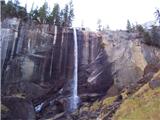
We first spot the waterfall at the bridge over the Merced River.
On the other side of the bridge is a junction where we must watch out not to go onto John Muir Trail - we must stay on Mist Trail.
2) Vernal Fall -> Nevada Fall.
Above Vernal Fall is a large pool called Emerald Pool, above it Silver Apron.
Swimming in the pool is prohibited and also very dangerous.
In July 2011, three young daredevils who were frolicking in the pool were swept over the fall.
One after the other, the river current undermined them and carried them over the fall into the depths.
Their bodies were never found.
On this stage we soon spot the beautiful Nevada Fall.
We climb along the left side of the fall.
Near the top of the fall, Mist Trail ends - we join John Muir Trail.
The top of Nevada Fall is a few minutes from the point where we join John Muir Trail.
We can walk to the fall right now, though I prefer to continue the path toward Half Dome and view the fall on the descent.
Here we are approximately halfway.
If we haven't dawdled too much, we've been on the trail about two hours.
3) Nevada Fall - Subdome.
John Muir Trail takes us through Little Yosemite Valley.
On our right flows the Merced River.
On the left we can admire the southeast side of Half Dome.
Clearly visible are the main summit and the sub-summit called Subdome.
The trail first descends, then levels out.
Soon we reach a junction - here we turn left toward Half Dome.
The path starts climbing through the forest.
After a few switchbacks we reach the base of the Subdome.
Here beautiful views open to the Sierra Nevada peaks.
The climb to Subdome is very steep at first, but soon we reach the top.
Before us is the finale - ascent to Half Dome summit.
4) Subdome -> Half Dome summit
The last 150 elevation meters must be overcome on a very steep granite slope.
This part is secured with two steel cables.
Without the cables it would be almost impossible to climb to the summit, as the granite slope is very smooth.
Since 2011, a permit is required for the ascent to Half Dome summit.
On summer weekends there was indeed a big crowd on the mountain and this caused dangerous situations on the cables. The crowd pushing up met the crowd descending.
On the smooth and steep slope you have to hold the cable all the time and it's hard to step aside.
Additional problem are people who don't usually go to the mountains and aren't used to moving in steep terrain.
And of course inappropriately equipped - dressed in jeans, wearing sneakers, some even in flip-flops.
The cables are raised about a meter above the slope, in winter they lower them to the rock (so snow avalanches don't tear them).
A permit for ascent is needed only during the time when the cables are raised.
That's usually from mid-May to mid-October (depending on weather and snow conditions).
I'm attaching some photos from the ascent to Half Dome on November 1, 2013.
The cables were lowered, so I didn't need a permit.
And there was no crowd either.
On the entire hike I met fewer than ten people.
On the summit I was completely alone.
 1 1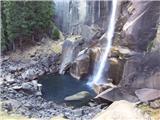 2 2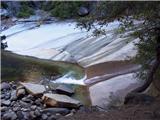 3 3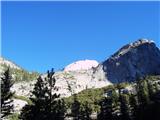 4 4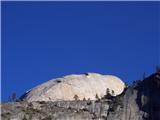 5 5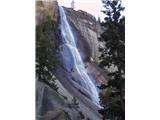 6 6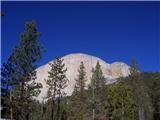 7 7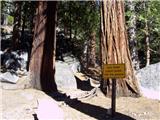 8 8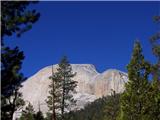 9 9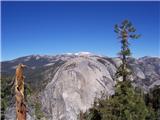 10 10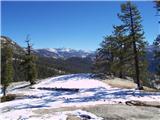 11 11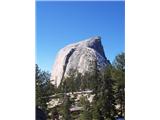 12 12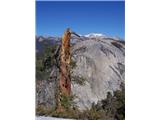 13 13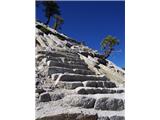 14 14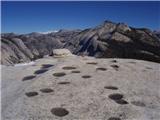 15 15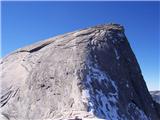 16 16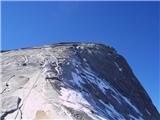 17 17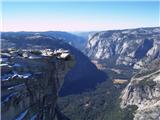 18 18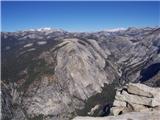 19 19 20 20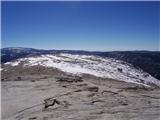 21 21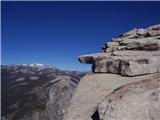 22 22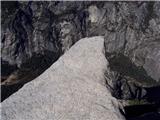 23 23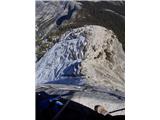 24 24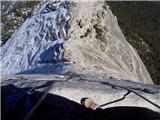 25 25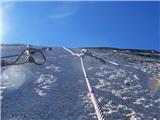 26 26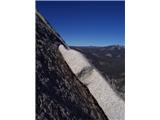 27 27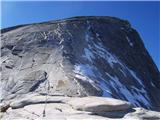 28 28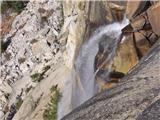 29 29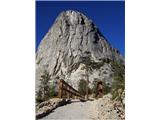 30 30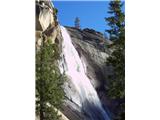 31 31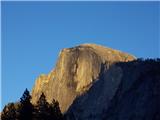 32 32
| (+10) |  | |
|
|